
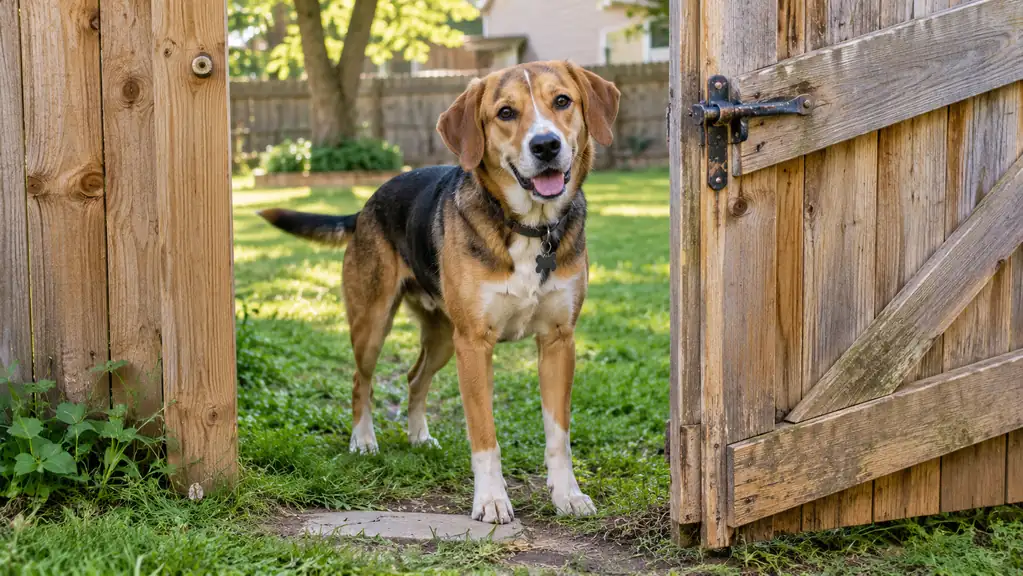
The alert hit my phone at 9:41 on a Saturday morning in May, and my first instinct was that the app had it wrong. Biscuit was in the back yard. He had been in the back yard all morning, nose down in the same patch of dirt he has claimed since we adopted him four years ago. Then I looked out the kitchen window. The gate was open about a foot and the yard was empty.
A delivery driver had left the latch up. Biscuit is a 5 year old beagle mix, 31 pounds, and a beagle with a scent in his nose does not consult anyone about the plan. I found him about four blocks away at the neighborhood park, nose in the grass, roughly twelve minutes after the alert came through. That is the whole case for a tracker, and it is a good one. I bought the Tractive GPS tracker in the first week of March, the week my routine changed, and it has been on his collar ever since. This is what eight months of daily use has actually been like.
The Quick Verdict
Reliable live tracking and a virtual fence that fired when it genuinely mattered. The heart, respiratory and bark features are interesting extras rather than veterinary tools, and the required subscription belongs in your math before you buy.
Amazon Check Today's Price →The tracker that found a beagle four blocks from home
Live location updates every 2 to 3 seconds, a virtual fence around the yard, and a battery I charge about every ten days. Check today's price and the current subscription options on Amazon.
Amazon Check Today's Price on Amazon →How I've Used It
I spent 26 years as an IT coordinator for a school district, which means I have set up more devices than I care to count and I read the manual before I plug anything in. I say that so you know where the following opinions come from. I am not a vet and I am not a trainer. I am a woman in Duluth with a beagle, a cat, and one router.
The reason I bought anything at all is that in the first week of March I started a part time job at the public library, three days a week, and for the first time in decades the house went empty on a regular schedule. Biscuit did not care for it. He whined at the door after I left and he watched the driveway. I bought the tracker that same week, with my own money, for exactly that reason.
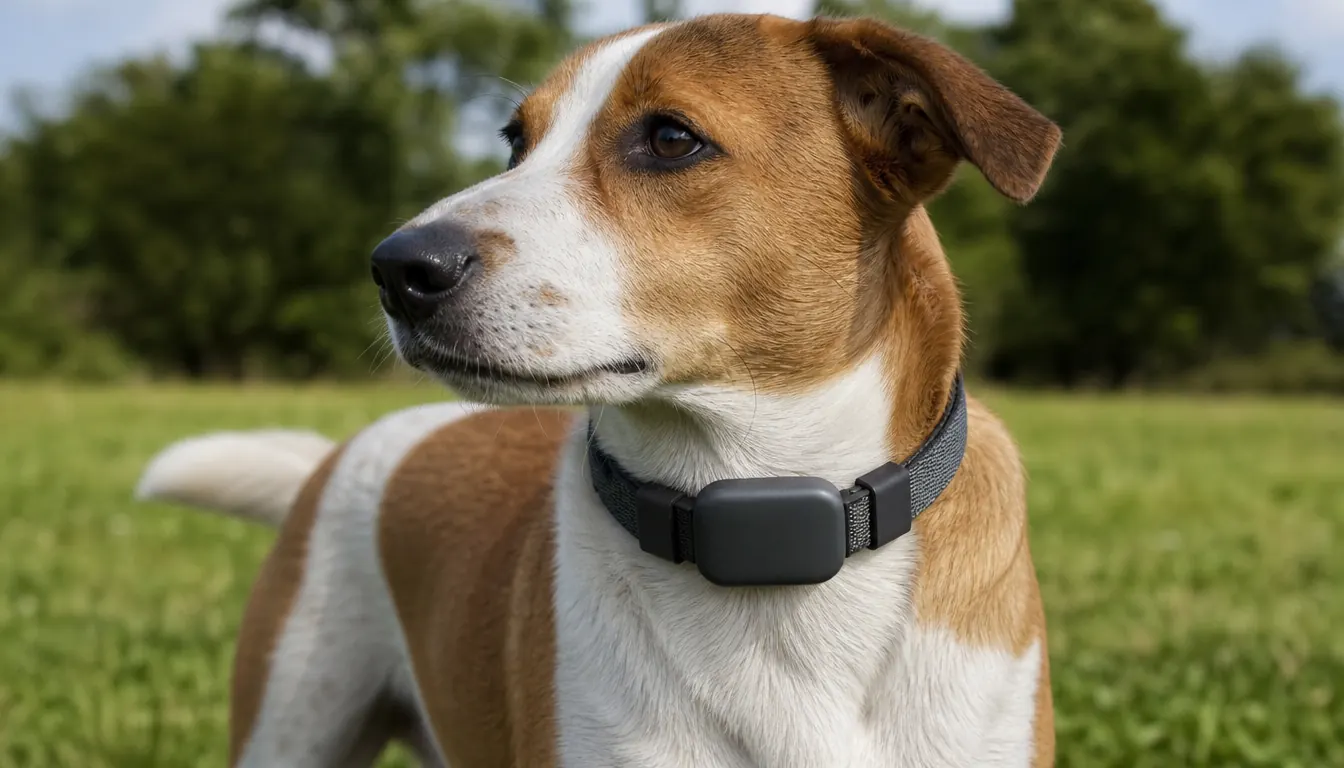
Setup took about twenty minutes, most of it spent waiting for a signal and rereading the clip instructions. The unit is 1.3 ounces and it attaches to his collar with rubber clips that came in the box, along with a charging cable. He is 31 pounds, so the weight is nothing to him. He scratched at it for one evening and then forgot it existed.
It has been on Biscuit's collar ever since. Never on the cat. Juniper is nine, indoor only, and weighs ten pounds, and I have no intention of putting a GPS unit on an animal who has never been outside. The tracker is a dog thing in this house.
What the Live Tracking Actually Feels Like
The listing promises live location updates every 2 to 3 seconds, and in practice that is what you get when the signal is good. I watched the marker move along the Lakewalk on an evening walk with Neil and it kept pace with us with no lag I could notice. That is a different experience from opening a map and hoping.
It runs on cellular signal, which is the part nobody puts on the front of the box. Where there is coverage you get a fast, accurate position. Where coverage thins out, you get the last known location and you wait. That is not a flaw in this particular tracker so much as a fact about cellular tracking generally, and it is worth knowing before you rely on one. In Duluth I have not had a problem on the routes we actually walk.
The location history is the feature I did not expect to use and now use constantly. I can look back at the day and see when he was moving and when he was sacked out on the living room floor. On the library days I open it at lunch, see a short line from the front door to the couch, and go back to shelving returns feeling fine about the world.
In July we drove down to Minneapolis to see our daughter Kari for a weekend. Biscuit came with us and wore the tracker the whole way. It was not useful in the car, obviously. It was useful at a rest stop and it was useful at a strange house with a strange yard and a gate I did not trust for one second.
The Virtual Fence and the Saturday in May
You draw a fence on the map around your yard, and when the dog crosses it, your phone tells you. That is the whole idea. I set ours around the back yard with a little margin and I tested it twice by walking Biscuit out the front door on leash to see whether the alert would fire. It did, both times, within a few seconds.
The fence is not magic and it is not a containment system. It tells you something happened. It does not stop anything. If your dog is a bolter and you are expecting the fence to keep him in, you have misunderstood the product and you will be unhappy with it. It is a notification, not a wall.
On the Saturday in May, the fence did exactly what I paid it to do. The gate was open, Biscuit was out, and my phone was buzzing before I had finished drying my hands. Twelve minutes later I had him. He was four blocks away at the park, absolutely unrepentant. I have thought about those twelve minutes a lot since. If I had been at the library, the alert would have reached me the same way, and Neil works days, so the honest answer is that it would have been a longer twelve minutes. Still far shorter than the alternative.
One real annoyance: the fence alerts are only as good as the line you draw. Mine was a little tight at first and I got a false alert when he was standing at the back corner of the yard sniffing a fence post. I pulled the boundary in a few feet and it stopped. Budget ten minutes to tune it and you will save yourself a startle.
It tells you something happened. It does not stop anything. Twelve minutes after the alert I had him back, four blocks away and entirely unrepentant.
Battery, Waterproofing, and the Details Nobody Mentions
Tractive lists up to 14 days of battery. I charge ours about every ten days, on Sunday morning, out of caution rather than necessity. The charging cable in the box is a short one, so I leave it plugged in on the kitchen counter and clip the tracker on while I make coffee. It takes a couple of hours. If you are the sort of person who forgets, put a recurring reminder in your phone the day you set it up, because a dead tracker is a collar decoration.
It is fully waterproof, which I have tested in rain on the Lakewalk and once in a puddle of unknown depth near the boat launch. It came out fine both times. Biscuit swims like a brick, so I do not have a lake test for you.
The 1.3 ounces is the number that matters most if you have a small dog. Tractive says the unit is light enough for any dog over 8 pounds. On a 31 pound beagle it is invisible. On a nine pound dog it is a much bigger fraction of the animal, and I would want to hold one in person before committing. The rubber clips hold it on a standard collar and it has not come loose in eight months of a dog who runs through brush without slowing down.
There is a two year manufacturer warranty. I have not needed it. The unit has taken rain, mud, a tumble down the porch steps and one very wet afternoon, and it still charges and reports. That is a low bar, I know. It is also the bar most of these things fail.

Heart Rate, Respiratory Rate, and Bark Monitoring
This model monitors changes in the dog's heart and respiratory rates, learns his normal behavior, and flags when something drifts. I want to be careful here, because this is the part of the listing most likely to be oversold by everyone, including me. It is not a diagnostic tool. It is a trend line on a screen.
What it actually did for us: it showed me that Biscuit's resting numbers are steady and boring, which is exactly what I want from a middle aged beagle. When he had a rough week in June the numbers did not move much and I called Dr. Anand anyway, because he was off his food, and it turned out to be a tooth. The tracker did not find that. What it did was establish a baseline so I was not guessing when I picked up the phone.
Bark monitoring is the feature I use least. Biscuit barks at the mail carrier, at the squirrel who lives under the deck, and at one specific delivery truck. If I am at the library and a bark alert comes through, I check the location history, confirm he is in the yard where he belongs, and go back to work. The value is not the single bark. The value would be an hour of nonstop barking, which would tell me something is wrong. That has not happened, and I am glad of it.
It is worth saying plainly that this is a reporting device. It did not change Biscuit's recall and it will not change your dog's. Nothing on his collar trains him. The training happens on the other end of the leash, with a person, in the rain, repeatedly.
What I Liked
- Live location updates every 2 to 3 seconds, and mine kept pace with a walking dog
- The virtual fence fired in a test and fired on the real thing, which is the only test that counts
- 1.3 ounces on a 31 pound dog, and he stopped noticing it after one evening
- Location history turned out to be the feature I use most on library days
- Fully waterproof through rain and puddles
- About ten days between charges in my use, against a listed 14 days
- Two year manufacturer warranty
Where It Falls Short
- Needs a Tractive subscription, which is a real ongoing cost on top of the hardware
- Runs on cellular signal, so a coverage gap means a stale position
- The virtual fence needs tuning or you get false alerts at the yard boundary
- Bark alerts on a beagle are chatty and mostly tell me about the mail carrier
- Heart and respiratory monitoring is a trend, not a diagnosis, and it will not replace your vet
Who This Is For
If your dog has ever gone out a gate, a door, or a hole in a hedge, this is the most peace of mind I know of for the money. It fits best on a dog with some roam in him: a beagle nose, a husky's opinions, a terrier's confidence. It fits the household where the house goes empty on a schedule and nobody is home to notice the latch. And it fits the person who wants the live map and the fence more than the health features, because those two things are what it does best.
It also suits anyone who has set up a smart device before. The setup is not hard, but it assumes you can follow instructions, wait for a signal, and keep a subscription active. If you can pair a speaker, you can do this.
Who Should Skip It
Skip it if your dog is never off leash and never out of a yard with a gate that reliably gets latched. Skip it if the subscription is going to be a problem, because a tracker without a plan is a paperweight. Skip it if what you want is a device that stops a dog from bolting, since the fence reports and does not restrain. And skip it if you want medical-grade vitals. A wearable trend is not an exam, and no app has ever looked at a dog's teeth.
One more, and this comes straight from the listing rather than from me: the tracker is built for dogs over 8 pounds. If you have a very small dog, believe that number and look at something lighter.
Eight months, one escape, twelve minutes
The fence alert, the live map, and a beagle back on the couch before I finished panicking. Check today's price and current subscription options on Amazon.
Amazon Check Today's Price on Amazon →