
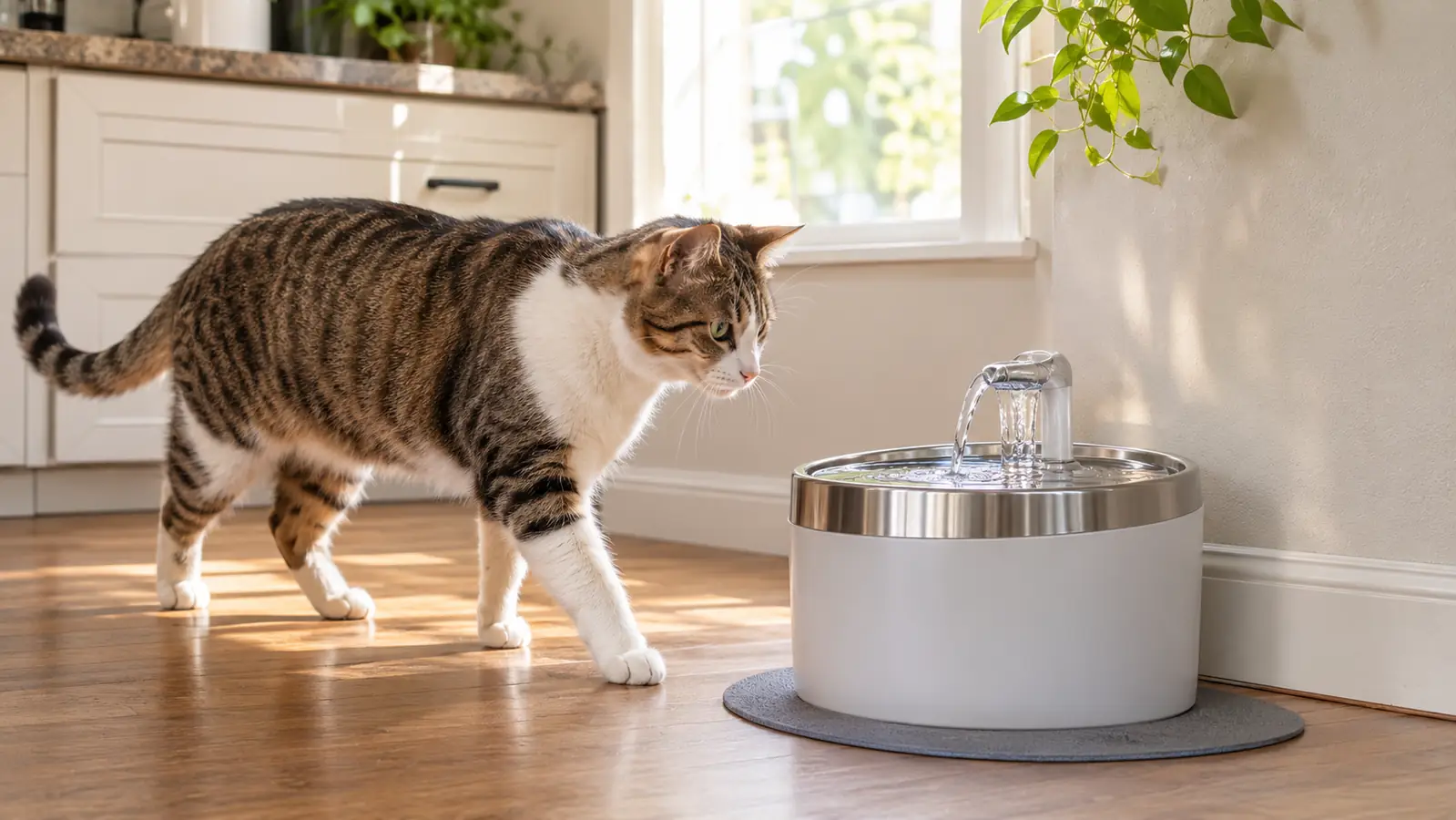
Juniper is nine years old, ten pounds, gray tabby, indoor only, and she has strong opinions about water. For years she drank out of one plain ceramic bowl on the kitchen floor, and I knew exactly how much she was drinking because the level in that bowl barely moved between refills. I topped it up every morning. She took a polite sip and walked away. Then I took the part time job at the library three days a week, the house went quiet and empty on Tuesdays, Wednesdays and Thursdays, and I started paying closer attention to whether she was drinking anything at all.
That is why I bought the PETKIT Eversweet Solo SE in the first week of March, along with the rest of the gear I picked up that same week. It is a 65 ounce fountain with a filter in the box and a pump that lifts out in one piece. I put it in the corner where the ceramic bowl had been, and Juniper was drinking from it by day three. She is not a bold cat. She does not investigate new things. She investigated this one because the water was moving and she could hear it from the doorway. What follows is the order I did things in, including the parts I had to redo because I rushed them.
The Fountain My Picky Cat Actually Used
65 ounces, a pump that lifts out in one piece for the weekly wash, and one light that tells you when it wants water. Juniper was drinking from it by day three.
Amazon Check Today's Price on Amazon →Step 1: Put It Where Your Cat Already Drinks
Cats do not like new. They like familiar with a small difference, and the small difference here is that the water moves. So the first thing I did, and the thing I would do again, was put the fountain exactly where the old ceramic bowl had been sitting. Same corner, same six inches of floor, a few feet from her food dish and well away from the laundry room where her litter box lives. She already knew that corner was where water came from. All I changed was the bowl.
The temptation is to put it somewhere more convenient for you, or somewhere it looks better, and I have watched people do this with pet gear for years. The fountain ends up in a hallway because the kitchen corner felt crowded, and then the cat never touches it and the fountain gets blamed. Location is the closest thing to free you will get out of this, and it is most of the job. It also needs to be somewhere you walk past every morning, because you will be looking at a small light on it, and a fountain you forget about is a fountain that runs low and gets loud.
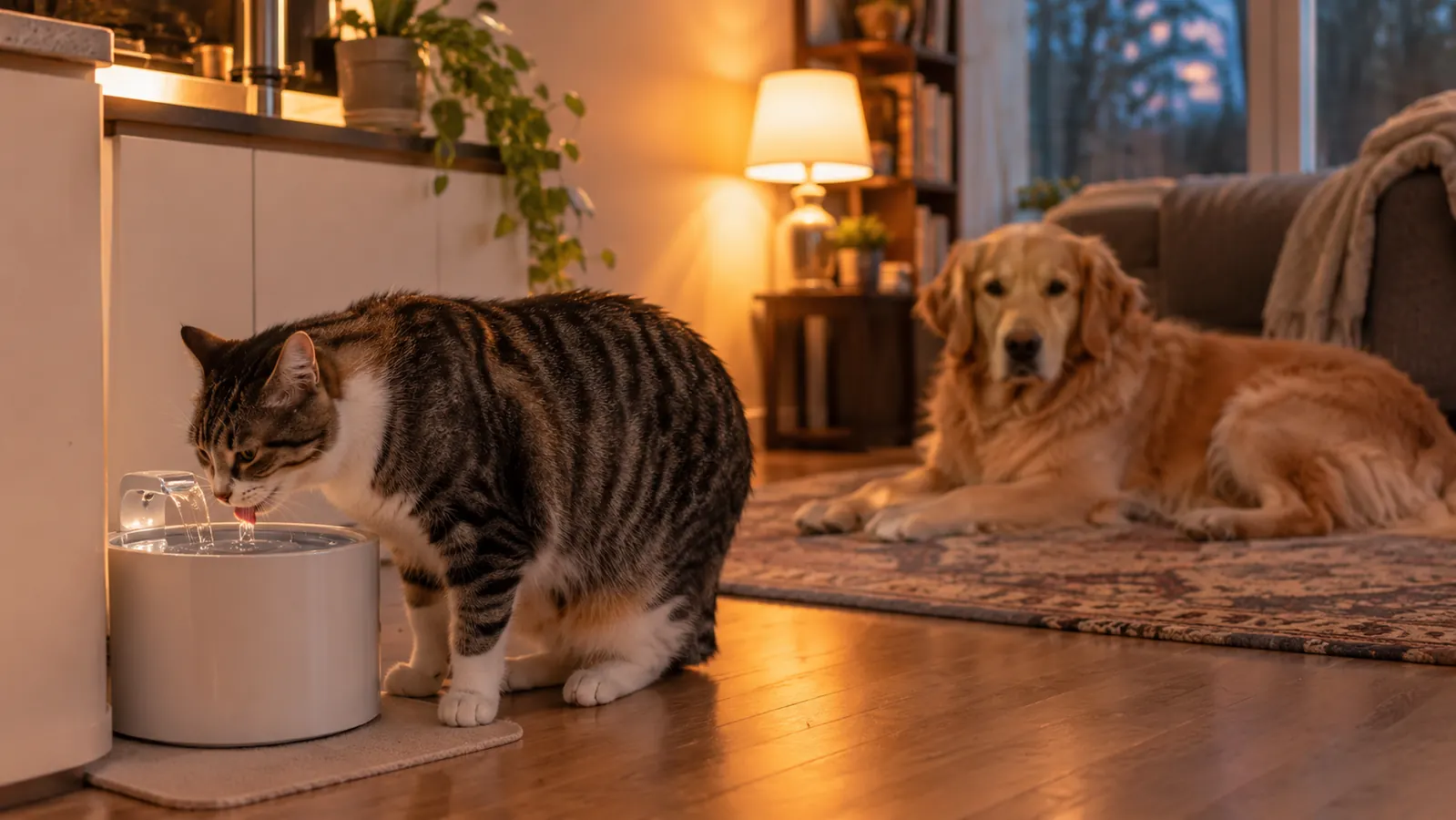
Ours sits in a corner with a wall on two sides, which keeps Biscuit from clipping it with his shoulder when he comes through at speed. He is thirty one pounds of beagle mix and he drinks from it too. A corner spot has meant it has not been knocked over once in eight months. The cord runs along the baseboard behind it, out of the walking path, which is also why nobody has tripped on it since March.
Step 2: Fill It, Seat the Pump, and Then Stop Fiddling
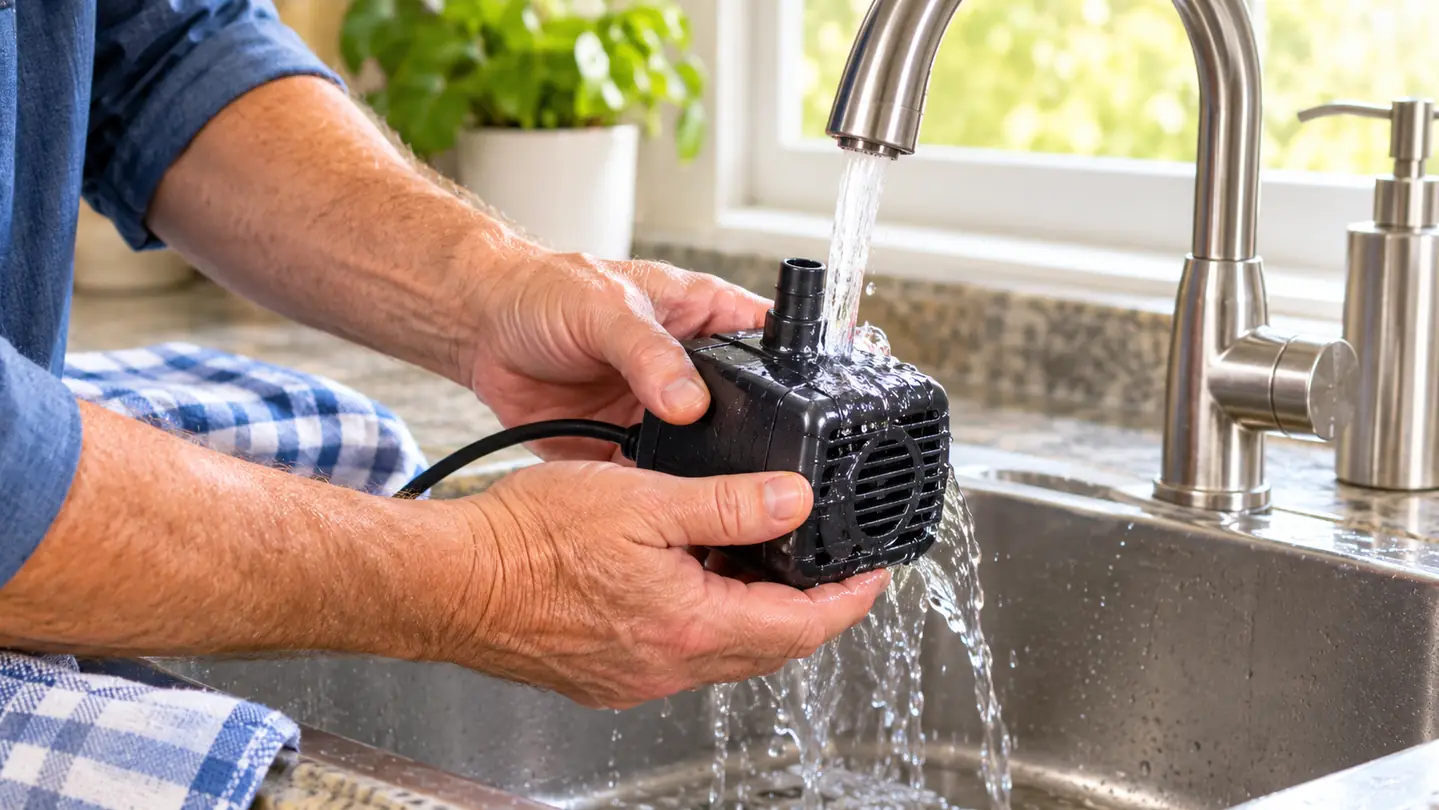
Fill it to the line with the pump seated flat in the base, plug the cord into the wall, and then leave it alone. The reservoir holds 1.85 liters, which is 65 ounces, and the whole unit is about seven inches on each side and just over two pounds, so it is easy to lift to the sink when it needs a wash. There is a USB cable in the box. The pump itself is the wireless part, which means it lifts out of the basin as one piece and you are not untangling a cord every week. The fountain still plugs into the wall. It is not a cordless unit and it is not battery powered.
The first time I filled it I did what I always do with a new gadget, which is fiddle. I moved it two inches, unplugged it to look at the bottom, plugged it back in, and generally made a production of it while a cat watched from the doorway and decided not to bother. That was the mistake. I wiped the counter, did not touch it again for the rest of the day, and the next morning she drank from it. If I had one piece of advice for the setup, it is to do the fiddling before the cat is in the room and then stop.
One thing I did not expect is that the fountain made me pay attention to the water itself. I use tap water, fill it to the line, and change the filter on the calendar. If your water is hard enough to leave a ring in a kettle, you will be changing that filter more often than I do, and you will see a film on the basin sooner. That is not a fault in the fountain. It is just what water does when it sits in the open air with a pump moving it around all day.
Step 3: Give It a Quiet Week
Day one, Juniper sniffed the edge and left. Day two, she sat and watched it. Day three, she drank, and she has drunk from it every day since. The old ceramic bowl stayed on the floor for the first week so she had a fallback, and once she was using the fountain daily I picked the bowl up and put it in the cupboard. I would do that part the same way again. Taking the old bowl away on day one would have turned this into a standoff, and I would have lost.
The first week is the part nobody writes about, so here it is. For four days I second guessed the whole thing. She drank on day three, then skipped a day, then went back. That is ordinary cat behavior and it is not a sign the fountain failed. I left it running, kept my hands off it, and by the end of the week she was using it several times a day. If you are the kind of person who needs immediate feedback on a purchase, this part is going to test you.
PETKIT lists the pump at 25 decibels, and I checked that number the way I check every number, by standing in the kitchen at 5:40 in the morning with a cup of coffee and listening. I could hear the water moving and I could not hear the pump. It is quieter than the refrigerator and quieter than the furnace. That is the whole reason this worked, I think. A loud fountain next to a food bowl is a thing a cat walks around.
Biscuit adjusted faster than the cat did, which surprised nobody. He drinks from it with his whole face and has not tipped it, but he is also the reason I check the water level every morning, because a thirty one pound dog drinks more in one visit than a ten pound cat does all day. Two animals on one 1.85 liter reservoir means I top it up about every other day. If you have a big dog that likes fountains, plan on refilling more often than the cat people do.
Step 4: Wash It Weekly and Change the Filter Monthly
Once a week I unplug it, lift the top off, pull the pump out, and wash the parts by hand in the kitchen sink with a little mild dish soap and warm water. The pump lifts out as one piece. Rinse everything well, because soapy water is worse than no water, dry the base, and put it back together. From unplug to plugged back in, it takes me about six or seven minutes, and most of that is rinsing the corners where Biscuit's hair collects.
The filter is the other half of the maintenance. The fountain comes with a PETKIT filter 3.0 in the box, and I change it about once a month. I mark it on the calendar in the kitchen because otherwise I forget, and a filter that has been in there for three months is doing less than the one that just came out of the box. If your cat drinks noticeably less all of a sudden, change the filter and wash the pump before you conclude anything else. Twice now that has been the entire problem in this house.
Two small habits keep this from becoming a chore. I keep a spare filter in the drawer next to the sink so the monthly change does not turn into an errand. And I wipe the outside of the basin with a paper towel every couple of days, because a fountain in a kitchen with a dog gets a film on it, and a fountain that looks clean is easier to keep using. Neither of those is required by the manual. They are just what keeps it from being ignored.
Step 5: Learn What the Indicator Light Is Telling You
There is an indicator light on the unit that shows the working status of the fountain and warns you when it is out of water. That is the only feedback it gives you, and it is enough. I look at it when I start the coffee. Steady means fine. A warning means it wants water, and it has been right every time. It is not a smart fountain. There is no app, no schedule, no notification on my phone. I want to be plain about that, because the listing photos suggest more than they need to. It is a bowl with a pump in it and a light on the front.
My rule for anything that starts misbehaving is the same one I used for two decades of school laptops. Check the simplest thing first. If the fountain gets louder, the water level is low or hair is wrapped around the pump intake. If the light is warning you, fill it. If the pump is rattling, take it out and rinse it. In eight months I have not had a pump fail. The unit carries a one year manufacturer warranty, which I have not needed to use, and that is the honest report.
The cord is the one thing I would plan for. The unit sits on the floor and the cord runs to a wall outlet, so the outlet needs to be close enough that the cord is not stretched across a walkway. Ours goes along the baseboard behind the fountain, which keeps it out of the path and out of Biscuit's way. If your only open outlet is across the kitchen, move the fountain to the outlet rather than running an extension cord across the floor. A pet fountain that people trip over gets unplugged and stays unplugged.
What Else Helps
The fountain solves one problem, which is that still water in a bowl goes warm, flat and hairy, and a cat with a working nose knows it. It does not make a cat drink more if she is avoiding the bowl because of where it sits, or because the bowl is too narrow for her whiskers, or because she does not feel well. Those are separate fixes. A wide shallow bowl in a second room is worth trying before you buy anything at all, and if that alone gets her drinking, you have saved yourself the weekly wash.
Wet food is the other lever. Juniper gets hers with a spoonful of water stirred through it, which she has never complained about, and that does more for her intake than any fountain will. Dr. Anand has told me more than once that a cat who stops drinking entirely is a phone call, not a product problem, and I pass that along because it is true. The fountain made my picky cat drink more. It did not make her a different cat. She still yowls at 5 AM. She just does it next to a fountain now.
PETKIT lists the pump at 25 decibels. I could hear the water and not the pump, and that is the reason a nervous cat finally walked up to it.
Moving Water Is the Cheapest Thing to Try First
65 ounces, a filter in the box, and a pump that lifts out for the six minute weekly wash. Eight months in, ours runs every single day without a fuss.
Amazon Check Today's Price on Amazon →